How Red Light Therapy Can Complement Physical Therapy
Physical therapy helps people restore movement, improve strength, manage pain, and return to the activities that matter most. While exercise, manual therapy, education, and movement retraining remain at the center of rehabilitation, some patients may benefit from complementary recovery services.
One option is red light therapy, also known as photobiomodulation. When used appropriately, red light therapy may support comfort, recovery, and tissue wellness alongside a personalized physical therapy plan.
At Pritchette Physical Therapy, red and near-infrared light therapy may be incorporated as a recovery-focused addition to care—not as a replacement for skilled rehabilitation.
What Is Red Light Therapy?
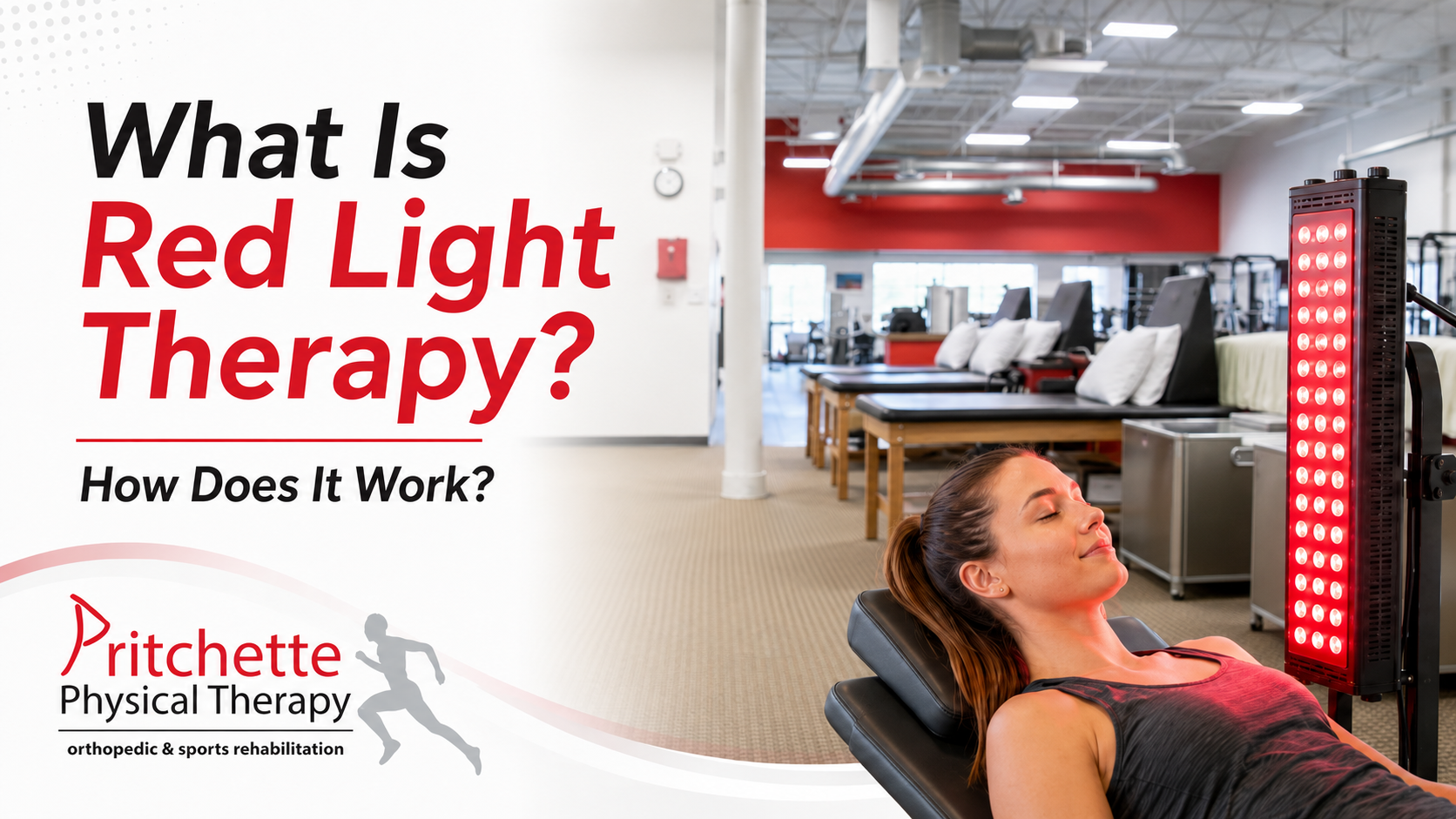
Red light therapy uses selected wavelengths of red and near-infrared light delivered through light-emitting diodes, commonly called LEDs.
The FDA describes photobiomodulation devices as systems designed to deliver a non-heating dose of light energy into the body for a potential clinical benefit. Unlike ultraviolet light, red light therapy does not use UV radiation. It is also different from an infrared sauna because the primary goal is not to heat the body or cause sweating.
During a session, the treatment area is positioned near a light panel. Most people experience gentle warmth or little sensation at all.
How Physical Therapy Supports Recovery
Physical therapy addresses the factors contributing to pain, weakness, stiffness, or reduced function. Depending on the patient, treatment may include:
Therapeutic exercise
Strength and endurance training
Balance and coordination activities
Mobility and flexibility work
Manual therapy
Movement and posture education
Activity modification
A personalized home-exercise program
These interventions help improve the body’s ability to move and function. Red light therapy does not replace them. Instead, it may serve as an additional tool that supports the recovery environment.
Potential Ways Red Light Therapy May Complement Physical Therapy
1. Supporting Muscle Recovery
Rehabilitation exercises are designed to challenge muscles so they can become stronger and more resilient. Some patients experience temporary muscle fatigue or soreness as their activity level increases.
Research has explored photobiomodulation for muscular performance, fatigue, and exercise recovery. Some findings have been encouraging, although treatment methods and dosages vary considerably among studies.
When appropriate, red light therapy may be used before or after a therapy session to support muscle recovery as the patient progresses through strengthening exercises.
2. Supporting Comfort During Rehabilitation
Pain or discomfort can sometimes make it harder to participate fully in exercise and movement-based treatment.
Photobiomodulation has been studied as a noninvasive option for musculoskeletal discomfort. However, its effectiveness can differ according to the condition, treatment area, device, wavelength, and dosage.
Red light therapy may help some patients feel more comfortable, but it should not be used to mask symptoms that require further evaluation.
3. Promoting Relaxation and Reducing Muscle Tension
Patients who are dealing with pain or injury may unintentionally guard an area by tightening nearby muscles. This protective response can contribute to stiffness and make movement feel more difficult.
A comfortable red light therapy session may promote relaxation and may fit well alongside mobility work, massage therapy, manual therapy, or stretching.
Feeling more relaxed does not correct the underlying movement problem by itself, but it may make it easier for some patients to participate in their rehabilitation program.
4. Supporting Circulation and Tissue Wellness
Red and near-infrared light are being studied for their possible effects on cellular signaling, mitochondrial activity, and local blood flow.
Researchers continue to investigate how photobiomodulation may influence tissue recovery. The exact response depends heavily on treatment parameters, and the actual benefits remain an active area of research.
For that reason, red light therapy is best presented as a complementary service rather than a guaranteed treatment for tissue healing.
5. Providing a Noninvasive Recovery Option
Red light therapy does not involve needles, medication, electrical stimulation, or manual pressure.
For patients who prefer a passive and comfortable recovery service, it may be an appealing addition to active physical therapy. Sessions generally require little preparation and usually involve no downtime.
When Might Red Light Therapy Be Used?
Depending on a patient’s goals and health history, red light therapy may be considered:
Before therapeutic exercise
After strengthening or conditioning
Following a demanding rehabilitation session
On a separate recovery day
Alongside massage or manual therapy
As part of an athletic recovery routine
During a wellness program after formal rehabilitation
The timing and frequency should be based on the individual rather than a one-size-fits-all schedule.
Why Active Rehabilitation Still Matters
It is important to distinguish between supporting recovery and correcting the cause of a problem.
Red light therapy may help create a more comfortable recovery experience, but it cannot independently restore strength, improve balance, retrain movement, or correct activity-related limitations.
For lasting improvement, patients often need an active plan that addresses:
Muscle weakness
Joint stiffness
Reduced endurance
Poor movement mechanics
Balance deficits
Work or sports demands
Lifestyle and activity habits
Red light therapy may complement that process, but meaningful functional change still comes from appropriate movement, progressive loading, education, and consistency.
Is Red Light Therapy Appropriate for Everyone?
Red light therapy is generally noninvasive, but it may not be right for every person.
Before beginning treatment, tell your therapist or healthcare provider if you:
Take medication that causes light sensitivity
Have a photosensitivity disorder
Have an active cancer or suspicious skin lesion in the treatment area
Are pregnant
Have reduced sensation
Recently underwent surgery
Have an eye condition
Have been advised to avoid light-based treatments
Protective eyewear may be recommended depending on the device and treatment area.
Persistent pain, unexplained swelling, weakness, numbness, or a new injury should be properly evaluated rather than managed with a recovery service alone.
A More Complete Approach to Recovery
Physical therapy works best when treatment is matched to the patient’s condition, goals, and activity demands.
For some people, red light therapy may provide a comfortable way to support muscle recovery, relaxation, and tissue wellness while they continue the active work of rehabilitation.
At Pritchette Physical Therapy, our team can help determine whether red light therapy may be a useful addition to your physical therapy or wellness program.
Learn More at Pritchette Physical Therapy
Pritchette Physical Therapy offers red and near-infrared light therapy for patients, athletes, active adults, and wellness clients in Ahwatukee and the surrounding Phoenix community.
Contact Pritchette Physical Therapy 480-785-5415 to learn how red light therapy may fit into your recovery plan or to schedule a session.
What Is Red Light Therapy and How Does It Work?
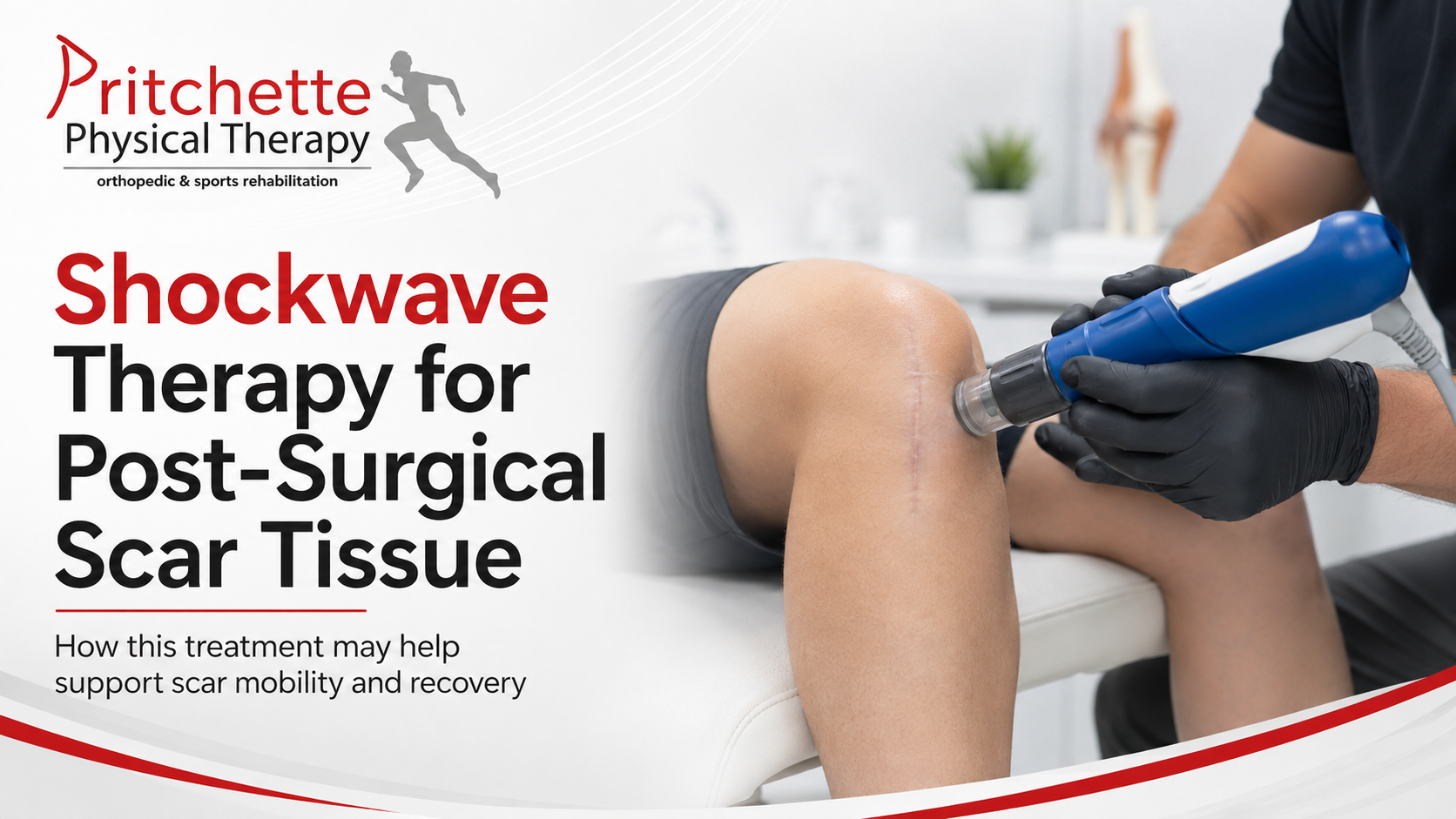
Can Shockwave Therapy Help with Post-Surgical Scar Tissue?
Can Shockwave Therapy Help Treat Elbow Tendonitis?
Elbow pain can make everyday tasks more difficult than most people expect. Lifting a coffee cup, gripping a golf club, carrying groceries, typing at work, or returning to the gym can all become frustrating when the outside or inside of the elbow stays irritated.
If you have been dealing with ongoing elbow pain, shockwave therapy may be a treatment option worth discussing with your therapist.
At Pritchette Physical Therapy, shockwave therapy is offered as an add-on service to physical therapy care for appropriate patients dealing with stubborn muscle, tendon, and soft tissue conditions. For people struggling with elbow tendonitis, it may help support recovery and complement a complete rehabilitation plan.
What Is Elbow Tendonitis?
Elbow tendonitis is a general term often used to describe irritation or overload of the tendons around the elbow. Two of the most common types include:
Tennis elbow (lateral epicondylitis): pain on the outside of the elbow
Golfer’s elbow (medial epicondylitis): pain on the inside of the elbow
Despite the names, you do not have to play tennis or golf to develop these conditions. Elbow tendon pain can also come from:
Repetitive gripping
Lifting
Typing or mouse use
Manual labor
Weight training
Racquet sports
Golf
Home improvement tasks
Repetitive work or recreational activities
When the tendon stays irritated over time, the pain can become persistent and may begin to affect strength, grip tolerance, and daily function.
What Is Shockwave Therapy?
Shockwave therapy, also called radial pressure wave therapy, is a non-invasive treatment that uses targeted acoustic pressure waves applied to a specific area of the body.
During treatment, a handheld device is used over the affected tissue. The pressure waves are directed into the area of concern to help stimulate the tissue and support the body’s natural healing response.
At Pritchette Physical Therapy, shockwave therapy may be used as part of a broader treatment plan for stubborn tendon and soft tissue issues, including elbow tendonitis.
How Shockwave Therapy May Help Elbow Tendonitis
Elbow tendonitis often involves tissue that has been irritated for weeks or even months. In some cases, rest alone is not enough to fully resolve the issue, especially if the tendon has continued to be stressed during work, sports, or daily activity.
Shockwave therapy may help support:
Tissue healing
Improved local circulation
Reduced pain and tension
Improved mobility
Better tolerance to gripping, lifting, and exercise
Progression back toward normal activity
It is important to understand that shockwave therapy is not a stand-alone cure. It is best used as one tool within a full physical therapy plan that addresses the underlying reason the elbow became irritated in the first place.
What Does Treatment Feel Like?
Most patients describe shockwave therapy as a tapping, pulsing, or pressure-like sensation over the treatment area.
Because irritated tendons can be sensitive, some discomfort during treatment is possible, but the intensity can usually be adjusted based on your tolerance and the goals of the session.
Treatment sessions are typically brief, and some patients notice mild soreness afterward, similar to what you might feel after a focused hands-on treatment or a challenging exercise session.
Why Physical Therapy Still Matters
While shockwave therapy may be helpful, successful treatment of elbow tendonitis usually requires more than just treating the painful spot.
At Pritchette Physical Therapy, your plan of care may also include:
Activity modification guidance
Mobility work
Hands-on therapy
Progressive strengthening
Grip and forearm loading exercises
Shoulder and wrist mechanics assessment
Movement retraining
Education on returning to work, sports, or the gym
This matters because elbow pain is often influenced by how the entire arm is functioning, not just the tendon itself. A comprehensive physical therapy approach helps address both the symptoms and the contributing factors.
Who May Be a Good Candidate?
Shockwave therapy may be worth discussing if you:
Have ongoing tennis elbow or golfer’s elbow symptoms
Have pain that has not fully improved with rest alone
Feel limited with gripping, lifting, or exercise
Have chronic tendon irritation that is slowing your progress
Want to explore a non-invasive add-on treatment option
Your therapist will determine whether shockwave therapy is appropriate based on your symptoms, history, goals, and overall presentation.
When to Seek Help for Elbow Tendonitis
If your elbow pain has lasted more than a few weeks, keeps coming back, or is affecting your work, workouts, sports, or normal routine, it may be time to get it evaluated.
The earlier you address ongoing tendon irritation, the better your chances of avoiding prolonged frustration and unnecessary limitation.
Shockwave Therapy at Pritchette Physical Therapy
At Pritchette Physical Therapy, shockwave therapy is offered as an add-on service to help support patients dealing with stubborn tendon and soft tissue pain, including elbow tendonitis.
This service is provided in conjunction with your physical therapy care and is not reimbursed by insurance plans.
If you are struggling with elbow pain and want to know whether shockwave therapy may be a good fit, our team can evaluate your condition and help you decide on the right treatment plan.
Ready to Learn More?
If elbow tendonitis is limiting your workouts, work tasks, or daily activities, ask your therapist whether shockwave therapy may be right for you.