
Shockwave Therapy at Pritchette Physical Therapy
Advanced Focused & Radial Shockwave Therapy in Ahwatukee
Pritchette Physical Therapy now offers two advanced forms of shockwave therapy, giving our therapists greater flexibility when treating persistent tendon, muscle, fascia, and other musculoskeletal conditions.
Our shockwave technology includes:
DUOLITH® SD1 T-TOP Ultra — Focused Shockwave Therapy (ESWT)
Our newest and most advanced shockwave system delivers precisely targeted focused shockwaves to specific treatment areas, including structures located deeper within the body.
STORZ MASTERPULS® ONE — Radial Pressure Wave Therapy
Radial pressure waves allow our therapists to treat broader areas of muscle, tendon, fascia, and other soft tissue.
Having access to both focused and radial shockwave technology allows our therapists to select the treatment approach that best matches your condition, the location of the involved tissue, and your rehabilitation goals.
Shockwave therapy is a non-invasive treatment that may be incorporated into your physical therapy program to support recovery and help patients dealing with stubborn musculoskeletal pain and soft tissue conditions.
Introducing the DUOLITH® SD1 T-TOP Ultra
Pritchette Physical Therapy has invested in the DUOLITH® SD1 T-TOP Ultra from STORZ Medical, an advanced focused Extracorporeal Shockwave Therapy (ESWT) system.
Unlike radial pressure wave therapy, focused shockwave technology concentrates acoustic energy into a smaller, precisely targeted treatment area. This allows clinicians to address specific structures at greater depths while controlling the location and intensity of treatment.
The DUOLITH SD1 T-TOP Ultra features:
Focused Extracorporeal Shockwave Therapy (ESWT)
Precise targeting of the treatment area
Adjustable energy and frequency
Focal zone depths from 0–65 mm
Therapeutic penetration depths of up to 125 mm
Advanced SEPIA® focused shockwave handpiece
Evidence-based STORZ Medical shockwave technology
The DUOLITH SD1 platform has received FDA approval for the treatment of heel pain associated with chronic proximal plantar fasciitis in qualifying adult patients.
Focused Shockwave vs. Radial Pressure Wave Therapy
Not all “shockwave therapy” is the same.
At Pritchette Physical Therapy, we have both Focused Shockwave Therapy and Radial Pressure Wave Therapy, allowing us to choose the technology best suited for the tissue and condition being treated.
Focused Shockwave Therapy — DUOLITH SD1 T-TOP Ultra
Focused shockwaves concentrate acoustic energy into a more precisely defined treatment area. Because the treatment depth can be targeted, focused shockwave may be useful when the involved tissue is deeper or when greater precision is desired.
Radial Pressure Wave Therapy — MASTERPULS ONE
Radial pressure waves spread outward from the applicator and are particularly useful for treating larger or more superficial areas of muscle, tendon, and connective tissue.
Why Having Both Matters
Some patients may benefit primarily from focused shockwave therapy. Others may respond better to radial pressure wave therapy. In certain situations, our therapists may incorporate both technologies as part of a comprehensive rehabilitation program.
Your therapist will determine the most appropriate approach based on your evaluation, symptoms, tissue involved, and rehabilitation goals.
What Is Shockwave Therapy?
Shockwave therapy uses controlled acoustic pressure waves applied to targeted areas of the body.
These acoustic waves interact with the treated tissue and may help support biological processes involved in tissue repair and recovery.
Unlike injections or surgical procedures, shockwave therapy is non-invasive and can usually be performed during a relatively short outpatient treatment session.
At Pritchette Physical Therapy, shockwave therapy is incorporated into a comprehensive rehabilitation approach rather than being used as a stand-alone treatment.
Conditions Shockwave Therapy May Help Support
Depending on your condition and clinical evaluation, shockwave therapy may be considered for musculoskeletal problems such as:
Plantar fasciitis and chronic heel pain
Achilles tendon problems
Tennis elbow
Golfer's elbow
Patellar tendon problems
Rotator cuff-related shoulder pain
Hip and lower-extremity tendon conditions
Chronic tendon irritation
Muscle and soft tissue pain
Trigger points and muscle tightness
Persistent soft tissue restrictions
Other chronic musculoskeletal conditions
Your therapist will evaluate your condition and determine whether focused shockwave therapy, radial pressure wave therapy, or another treatment approach is most appropriate.
Why Pritchette Physical Therapy Offers Advanced Shockwave Therapy
Many chronic tendon and soft tissue conditions can be difficult to resolve with rest alone.
By adding the DUOLITH SD1 T-TOP Ultra focused shockwave system to our existing radial pressure wave technology, Pritchette Physical Therapy can provide a more individualized shockwave treatment approach.
Shockwave therapy may help support:
Local circulation
Tissue recovery
Improved tissue mobility
Reduced muscle tension
Improved tolerance to movement and exercise
Progression toward functional and activity goals
Most importantly, shockwave therapy is combined with the other components of your rehabilitation program, which may include therapeutic exercise, strengthening, mobility training, manual therapy, movement retraining, and patient education.
What to Expect During Shockwave Therapy
Your therapist will first identify the tissue and area being treated and determine whether focused or radial shockwave therapy is most appropriate.
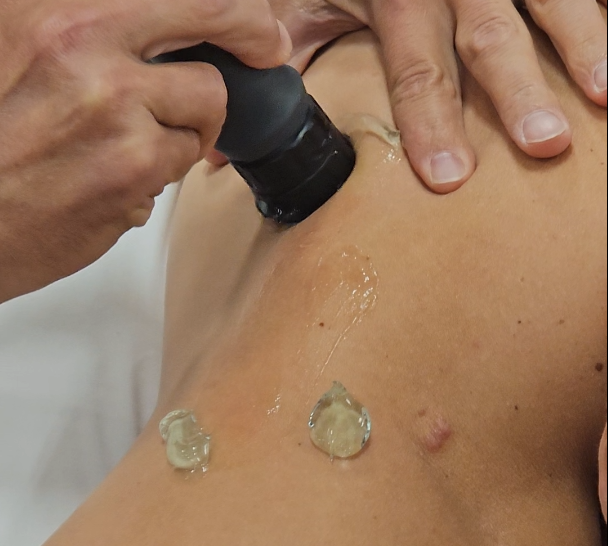
A handheld applicator is then positioned over the treatment area.
During treatment, you may feel tapping, pulsing, or pressure sensations. With focused shockwave therapy, the energy can be adjusted based on the targeted tissue, treatment depth, clinical goals, and your tolerance.
Treatment sessions are typically brief, and most patients can return to normal daily activities afterward. Temporary tenderness or soreness may occur in the treated area.
Is Shockwave Therapy Right for You?
Shockwave therapy may be worth considering when a musculoskeletal condition has remained persistent despite treatments such as activity modification, stretching, strengthening, exercise, or other conservative approaches.
It is not appropriate for every patient or every condition.
Your therapist will review your symptoms, health history, physical examination findings, and treatment goals before determining whether shockwave therapy should be incorporated into your rehabilitation program.
Experience Advanced Shockwave Therapy at Pritchette Physical Therapy
With the addition of the DUOLITH® SD1 T-TOP Ultra, Pritchette Physical Therapy now offers both Focused Shockwave Therapy (ESWT) and Radial Pressure Wave Therapy.
This gives our therapists another advanced tool to help patients dealing with persistent tendon, muscle, fascia, and musculoskeletal conditions get back to the activities they enjoy.
Schedule an Appointment
Interested in finding out whether shockwave therapy may be appropriate for you?
Contact Pritchette Physical Therapy today to schedule an evaluation or ask your therapist about incorporating focused or radial shockwave therapy into your rehabilitation program.
Shockwave therapy is a self-pay service and is not reimbursed by insurance plans.